

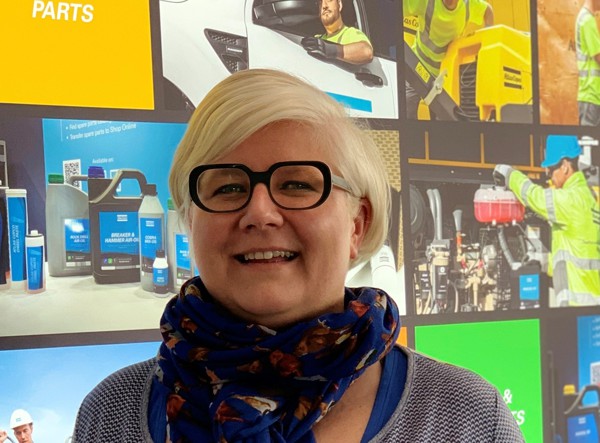
Sofie Vergult (Atlas Copco): “Employees stand before a group with more confidence”
In the world of industrial innovation, technical expertise is only half the story. Discover how Atlas Copco, in collaboration with BrainTrain, transformed technical knowledge into confident impact through a strategic ‘Train the Trainer’ trajectory.
As Vice President of HR for Power Technique Service at Atlas Copco, Sofie Vergult is responsible for, among other things, coaching the department in Wilrijk. The company encourages knowledge sharing among employees, who serve as each other’s coaches. To improve their skills, Sofie asked BrainTrain for a ‘Train the Trainer’ course. “Bart’s approach is bearing fruit.”
Atlas Copco produces industrial tools: from vacuum pumps to air compressors. Each division therefore houses a great deal of professional expertise. “Employees share this with each other through internal presentations,” says Sofie. “But an extensive analysis showed that these sometimes missed their mark. Although the employees possessed the necessary technical know-how in terms of content, they lacked the skills and confidence to convey it effectively.”
Personal connection
That is why Sofie turned to BrainTrain. “Previously, several colleagues and I had already followed a few training sessions at BrainTrain, including one on presentation techniques. We were impressed. In the first place, we felt a personal connection: Bart fits our corporate culture and quickly senses the needs. But in addition, he also impressed us with his way of training. He effortlessly combines theory with practical examples. In my opinion, that is the best way to learn.”
Sofie: “During the intake interview, he came up with possible solutions himself. He proposed a ‘Train the Trainer’ course, which he delivers in two days. The sessions were enriching. Bart uses music and drawings, responds to questions from participants, delivers his training with infectious enthusiasm, and does so in flawless English. We noticed that he had prepared the course thoroughly and implements various learning methods.”
Optimized growth opportunities
After the session, the participants were given homework. “We had to prepare a training session ourselves using the knowledge we had gained. During a follow-up session, everyone received an hour of individual coaching, in which Bart gave tips and tricks to achieve a better result. That setup optimized the growth opportunities.”
Today, the training is bearing fruit. “The difference compared to before is clearly noticeable. The quality of the training sessions is not only much higher, but employees also stand before a group with more confidence. They are moving away from their familiar PowerPoint presentations and effectively applying the techniques they have learned. We were so satisfied that we also organized the training for our middle management. In short: with BrainTrain, we have found a reliable partner that we can also call upon for future challenges.”
Ready for similar results within your organization?
You may still have questions about how we work or what to expect. Here are the answers to the questions we're asked most often.

What practical results can participants expect from this training?
The focus is on individual behaviour change, leading to a noticeable improvement in interactions with colleagues, team members, and clients. Many participants notice the difference during the training itself, with those new behaviours becoming firmly embedded through continued practice in the workplace.